
About BBNZG Team
Rae Butler - Promoting Bee Science for Everyday Beekeeping
Rae Butler is an experienced beekeeper with a passion for promoting and utilizing bee science in everyday beekeeping practices. With over 30 years of beekeeping experience, Rae is now specializing in breeding Varroa Sensitive Hygienic (VSH) queens using Instrumental Insemination (II) technology. She is the leader of the project Breeding for Varroa Resistance in New Zealand which includes the Bee Breeding New Zealand group (BBNZG) for the beekeeping industry.
Rae's journey in beekeeping began three decades ago when she established the Runny Honey Company as a sole trader, starting with 500 hives. Over the years, she expanded her operations and amalgamated with Wai Ora Apiaries in 2000, running 2,500 honey production beehives in North Canterbury. She is now a sole trader for Bee Smart Breeding working in Ashburton, mid-Canterbury.
In 2011, Rae shifted her focus towards queen raising and Instrumental Insemination (ii), specifically targeting the Varroa Sensitive Hygienic trait. She furthered her expertise by completing a course in ii under Sue Cobey at the Harry H Laidlaw Jr Honeybee Research Facility at Davis University, California. She also engaged with queen breeding experts and scientists, including the USDA lab in Baton Rouge and the Bee Informed Partnership at the University of Maryland. In 2019 and 2020, she exchanged visits with the VSH breeding program by Aristas Bee Research in the Netherlands, further expanding her knowledge and network.
Aside from her current breeding work, Rae actively participates in industry initiatives and organizations. She serves as an AP2 inspector for AFB and the Exotic Surveillance program, ensuring the health and safety of bee colonies. She is also working with a Canterbury group on promoting the development of Varroa mite monitoring tools for beekeepers. Rae is an ambassador for the NZ Trees for Bees program to improve bee health.
Rae has a long history of volunteer service to the beekeeping industry. She served as Canterbury Branch Secretary for the NZ National Beekeeping Association from 1996 to 2002. She also worked as the secretary for the NZ Varroa Pest Management Strategy Group from 1997 to 1999 and participated in the Varroa eradication trials in North Canterbury. Rae played a pivotal role in the establishment of the Nelson Beekeeping Club in 2010 to 2013.
Rae's expertise and contributions have earned invitations to present her work at various conferences and symposiums in New Zealand and Australia. She has also published articles in The New Zealand Beekeeper magazine.
Rae is dedicated to bringing together scientific research and beekeeping practice for the benefit of all beekeepers, queen producers and breeders to help to combat Varroa. Her experience in breeding VSH bees, technology transfer, and industry initiatives in New Zealand help to promote sustainable beekeeping practices for the betterment of bee health.


Linda Newstrom-Lloyd - Translating Bee Science for Beekeepers
Dr. Linda E. Newstrom-Lloyd is a botanist and pollination biologist specializing in bee nutrition and health. She earned her Ph.D. in botany from the University of California at Berkeley, USA, and has conducted research on pollination in California, Mexico, and Costa Rica.
As a science advisor for the New Zealand Varroa Resistance Project, Linda collaborates with Rae Butler to address the urgent threat of the Varroa mite on bee health and colony losses in New Zealand. Their work aims to protect the beekeeping industry and ensure important pollination services.
Since 2010, Linda has been involved in the Trees for Bees NZ programme, funded by the Ministry of Primary Industries. Her research focuses on bee nutrition, specifically studying the foraging habits of bees in New Zealand. Through her work with the Trees for Bees team, Linda has developed resources to guide beekeepers, farmers, and landowners in planting optimal bee forage, promoting bee health.
Linda and the Trees for Bees NZ team received recognition for their contributions, being awarded the ApiNZ 2022 Peter Molan Award for excellence in science at the ApiNZ national conference, sponsored by Oha Honey.
Linda leads fieldwork for Trees for Bees NZ and coordinates laboratory investigations to identify plants that provide the best nutrition for New Zealand bees. As part of their ongoing efforts, they have developed the Bee Plant Finder tool, a valuable resource for beekeepers and those interested in supporting bee health. Visit https://treesforbeesnz.org/bee-plant-finder-tool to access this tool.
Dr. Linda E. Newstrom-Lloyd's dedication to understanding and improving bee health contributes to sustainable beekeeping practices in New Zealand.
Julian McCurdy - Connecting Hive-Level Evidence, Breeding and Commercial Practice
Julian McCurdy came into beekeeping from a technology background over a decade ago. His work centres on a challenge: how to track individual colonies across a fast-moving commercial operation while ensuring each one is well cared for. Over the past year, systems he helped develop supported 8,032 hive inspections across 94 locations, linking field observations with queen, Varroa and production records.
Julian sees reliable identification, consistent inspections, clear follow-up and information that stays with each colony as foundations for better decisions and bee welfare. His work is guided by the principle that commercial efficiency should reduce avoidable harm rather than normalise it.
As apiculture changes, he believes beekeepers need faster access to useful knowledge, shared language and practical standards that make good care easier to deliver and poor outcomes harder to overlook. Technology should support beekeeper observation and judgement, not replace either.
At BBNZG, Julian hopes to help connect queen identity, lineage and structured VSH assessment with treatment history, survival, temperament, productivity and daughter-colony performance. This is necessary to identify resistance traits that remain commercially useful under New Zealand conditions.
He sees an opportunity for the team to build shared protocols and a national network of breeding hubs that strengthens existing breeders, improves independent confidence in their work and helps useful Varroa-resistance genetics spread more widely. His contribution is practical systems thinking at commercial scale, working alongside breeders, scientists and beekeepers to turn evidence into better outcomes for bees.
What interests me about Varroa-resistant breeding, technology and BBNZG
Varroa-resistant breeding interests me because it offers a practical way to improve bee welfare at its source: breeding colonies that can better defend themselves while remaining productive, manageable and genetically diverse. Technology can make that work visible and useful by connecting queen identity, lineage and VSH assessment with treatment history and real daughter-colony performance, allowing breeders and beekeepers to learn faster from what actually happens at commercial scale. What excites me about BBNZG's future is the opportunity to build a trusted national network of breeding hubs where independent breeders, scientists and practical beekeepers use shared protocols and evidence to strengthen their own programmes, demonstrate the commercial value of proven stock, and help useful resistance spread through queens, drones and open mating into New Zealand's wider bee population.
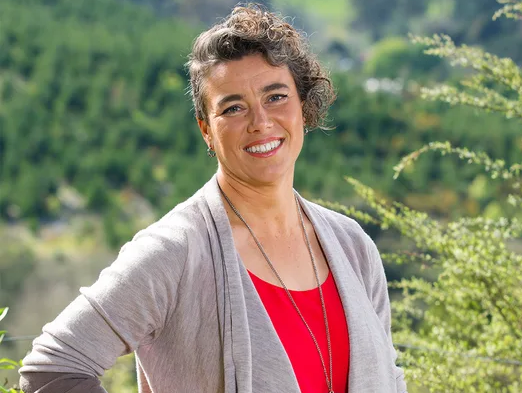
Christine Couldrey – Applying Genetics to Build Resilient Bees for New Zealand
Christine Couldrey is a molecular geneticist who earned her PhD as a Commonwealth Scholar at the University of Cambridge, UK. Her early research fellowships at the National Institutes of Health (USA) explored how both genes and environmental factors influence human diseases and their progression.
After returning home to New Zealand in 2006, Christine spent nearly 20 years studying how an animal’s genetics, environment, and even the microbes in and around it affect its health, growth, and production. These insights contributed to national breeding programmes focused on improving the performance and resilience of sheep and cattle.
Christine’s experience spans the full spectrum of genetic research - from sample collection and laboratory work to analysing large genetic datasets with advanced bioinformatics tools and leading scientific programmes.
For the past 16 years, she has also been helping her partner with his commercial beekeeping business near Raglan. This hands‑on involvement has shown her not only how remarkable bees are, but also the growing challenges faced by beekeepers. It has highlighted the need for coordinated breeding strategies to develop more resilient bee populations.
Christine is committed to applying the genetics expertise and lessons learned from livestock breeding programs to help strengthen and protect New Zealand’s bees - supporting an industry essential to the country’s environment, agriculture, and economy.

The Bee Breeding New Zealand Group (BBNZG)
The logo design features an illustration of four bees inside a koru. The four bees represent beekeepers, commercial beekeepers, queen breeders, and researchers. We believe that all beekeepers are custodians of their bees and align with the Māori philosophy of being guardians of the environment. We sought approval of the Māori slogan Kāhui kaitiaki pī (guardian of the bees), from the local Arowhenua Marae.
Members of the BBNZG can be as interactive as they like. We encourage the sharing of new research and ideas on how this can be utilised by beekeepers.
Kāhui kaitiaki pī - Guardians of the Bees

“The bees need our beekeepers to listen to the science and the scientists to listen to the beekeepers.”
— Rae Butler
